Custom swim trunks look deceptively simple to order. Pick a color, drop in a logo, choose a size run, done. Then the shorts arrive and the problems show up all at once: the fabric goes sheer when it is wet, the waistband is right for nobody, the print looks nothing like the mockup, and the whole batch is thinning out by the end of the first pool season. Almost none of that is bad luck. It traces back to a handful of decisions made too fast at the spec stage, and every one of them is avoidable if you know where orders go wrong.
Here are the mistakes that cost buyers the most on a bulk swim trunk order, and how to head each one off before the run goes to print. The numbers below are typical industry ranges, not fixed guarantees, so use them to frame a sample request rather than as a promise.
Mistake one: picking fabric for looks, not for the water it lives in
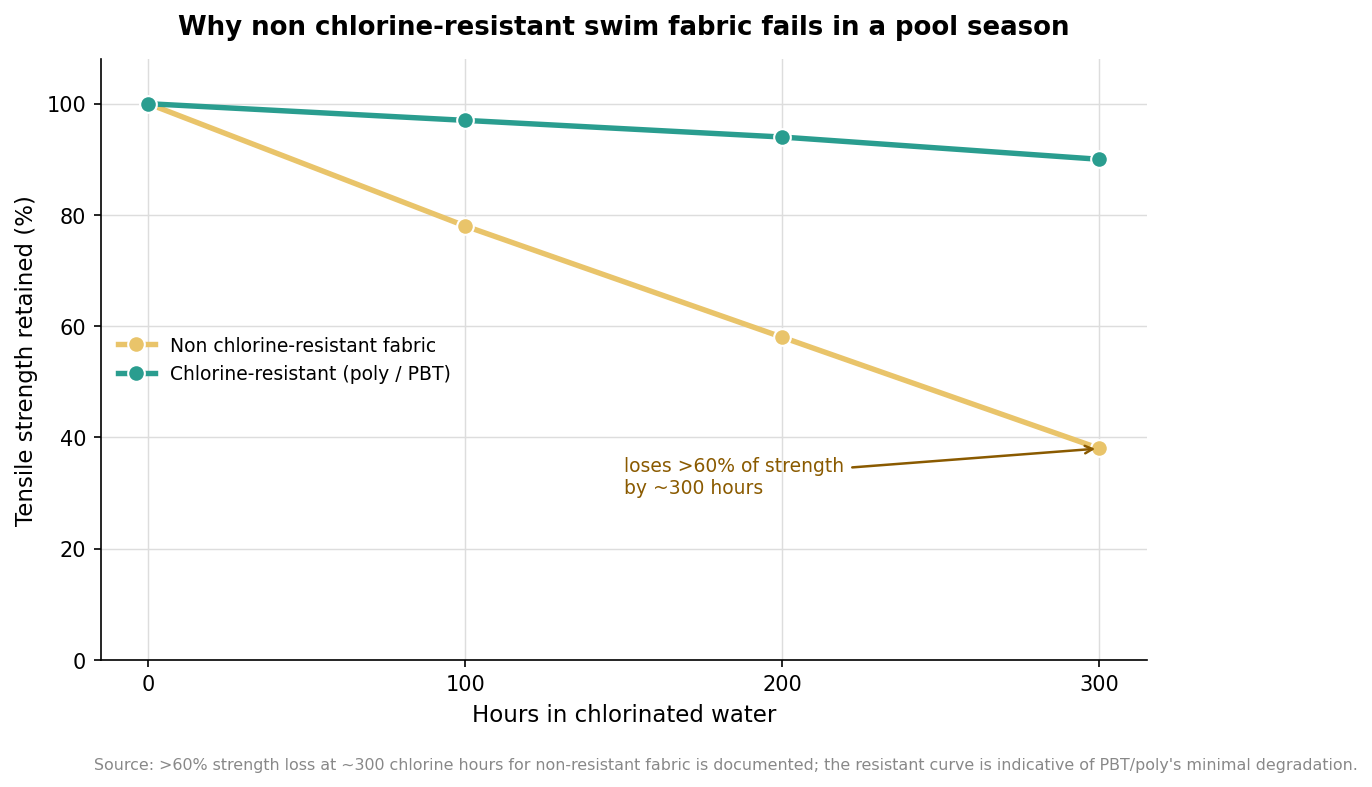
The single most expensive mistake is choosing swim fabric by hand-feel and color instead of by where the trunks will actually be worn. Fabric construction decides how long the shorts survive, and the differences are large. Nylon-spandex feels soft and stretches beautifully, at roughly 80 to 90 percent elongation, but it is only moderately chlorine resistant and is best for occasional or fashion use. Polyester-spandex is the pool workhorse: it stretches nearly as well at around 70 to 90 percent and holds up far better to chlorine. Polyester-PBT blends go further still, resisting chlorine for hundreds of hours with minimal breakdown, but they contain no spandex and stretch far less, around 20 to 50 percent.
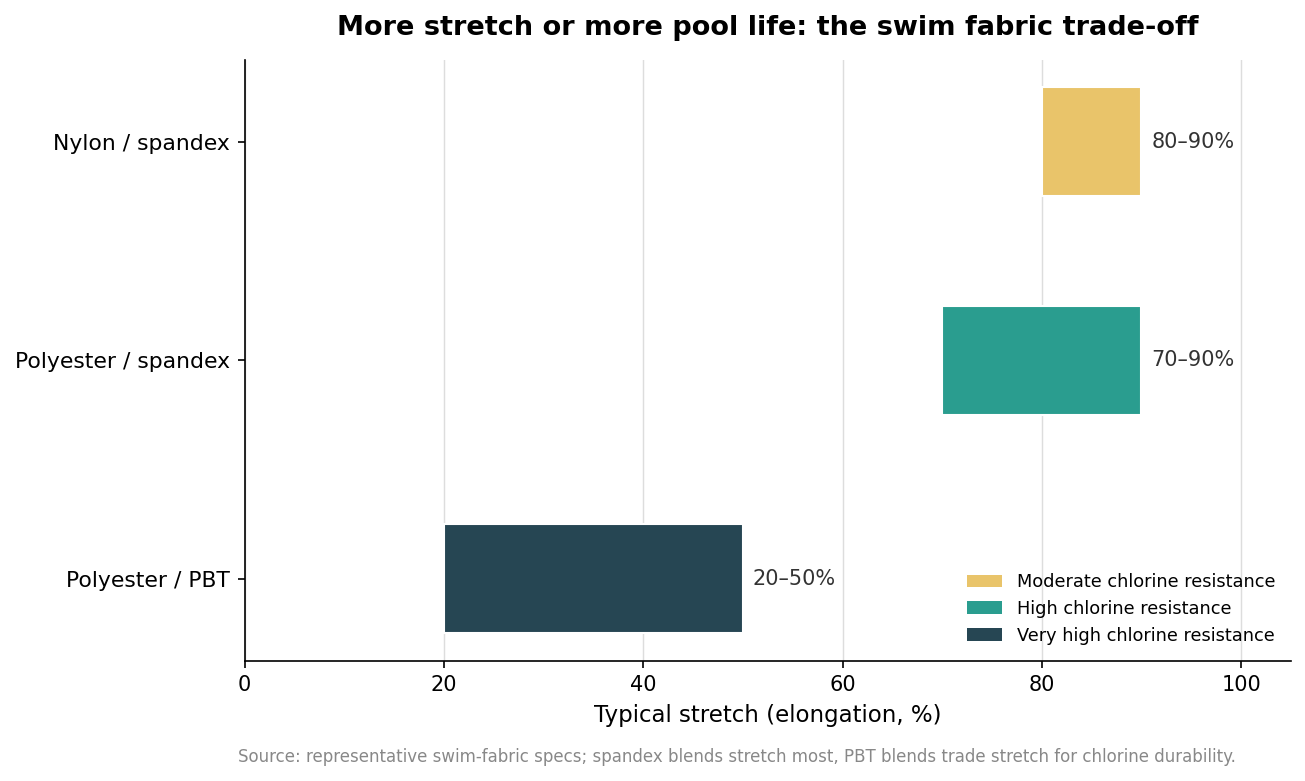
That trade-off is the whole decision. A resort or swim-team program where the trunks live in a chlorinated pool should lean toward polyester-based fabric and accept slightly less stretch; a fashion or event order that mostly sees saltwater and sun can favor the softer, stretchier nylon blend. Choosing the pretty fabric for a pool program is how you end up reordering a year early.
Mistake two: ignoring fabric weight until it turns sheer
Weight, measured in grams per square metre, is the spec that decides whether the trunks stay opaque when wet, and it is the one buyers skip most often. Very light fabric under about 150 GSM drapes like a second skin but can turn semi-sheer when it is stretched or soaked, which is a serious problem on swimwear and the reason those fabrics need a full liner or a dark color to be usable at all. The reliable range for swim shorts sits around 180 to 200 GSM, heavy enough to stay opaque and hold its shape, and heavier still if you want a sturdier, more structured short.
The failure here is ordering a thin, cheap-feeling fabric to hit a price, then discovering it is see-through wet on a light color. Ask for the GSM in writing, and check a wet sample in the actual print color before you approve a run, because opacity that looks fine dry can disappear the moment the short gets used for its one job.
Mistake three: guessing sizes instead of running a size set
Group swim orders fail on fit more than on anything else, because a waistband is far less forgiving than a t-shirt hem. Two mistakes compound each other: sizing to a vanity waist number rather than the actual measurement, and skipping a physical size set before committing the full run. Waist elastic, drawcord length, rise, and stretch all vary between makers, so a “34” from one supplier is not a “34” from the next, and a spec sheet cannot tell you how a given cut sits on a real range of bodies.
For any team, wedding party, or staff program, order a size set across the full range and have actual people try them on before the bulk run. It adds a week and a small cost up front, and it is far cheaper than a batch of trunks that fit half the group. Confirm the size chart is the supplier’s own measured chart, not a generic conversion, and pin down the drawcord and elastic spec while you are at it.
Mistake four: treating the liner and waistband as afterthoughts
The liner is the part wearers feel every minute and buyers think about last. A mesh liner breathes and dries fast but offers less support and can chafe on long wear; a brief-style liner supports more but holds water longer and adds warmth; and some fashion programs skip the liner entirely, which is a comfort and modesty decision that should be made on purpose, not by omission. None of these is wrong, but shipping a group order without deciding is how you get complaints you cannot fix after the fact.
The waistband deserves the same attention. A flat drawcord that is too short is useless, an elastic that is too aggressive is uncomfortable, and a cord tip that is not heat-sealed will fray in salt and chlorine. These are small specs with outsized impact on whether people actually wear the trunks, so put them in the brief rather than leaving them to the factory default.
Mistake five: rushing the artwork on all-over print
All-over print is where a rushed file turns into a batch you cannot use. Unlike a chest logo, an all-over pattern has to survive being cut apart and sewn back together, so a design that ignores the panel layout ends up with the logo bisected by a side seam or a pocket, and a repeat that does not tile cleanly shows an obvious break at every join. Sublimation, the method that actually bonds print into swim fabric, also needs the file built for a polyester-based cloth, because it will not take the same way on the wrong material.
Give the artwork the time the rest of the order does not get. Build the file to the supplier’s cut-and-sew template so seams fall where you expect, confirm the print method matches the fabric, and always approve a physical printed sample rather than a screen proof, since color and scale shift between monitor and dyed cloth. Get fabric, weight, sizing, liner, and artwork right at the spec stage and a swim trunk order is genuinely straightforward. Skip them and every one becomes a reprint.